The strain you can read off your old shoes
Jack Young here, founder of Colony Insoles. Underpronation is one of the most overlooked things people write to us about. The clinical name is supination, and it means your foot rolls to the outside as you step, so impact lands on the outer edge instead of spreading across the whole sole. The tell is right there on your closet floor: flip your shoes over and you’ll see the tread worn thin along the pinky-toe side. Add some nagging tightness in the ankles, shins, and knees after a long day, and that lopsided load is the reason. It compounds quietly.
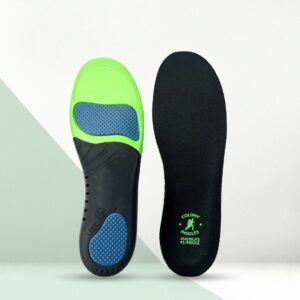 America’s #1 Insole
Premium Colony Insoles
- Recommended by podiatrists
- Memory foam + gel with real arch support
- 60-day money-back guarantee
- Free shipping within the USA
Why it reaches past your foot
A supinating foot loses most of its built-in shock absorption. The bones and joints can’t roll inward to flatten and cushion the landing, so the jolt of each stride shoots straight up the leg with nothing to soften it. That’s why underpronators tend to roll ankles more often, beat up the outside of the foot, and finish the day with tired, achy lower legs. Fixing how the foot lands isn’t a cosmetic tweak. It protects the entire chain stacked above it, all the way to the hips.
How ours helps
We built this insole to give underpronators back the cushion and the guidance they’re missing. The gel layer restores the shock absorption a high, rigid foot can’t produce on its own, while the plush memory foam cradles that overloaded outer edge. The structured, geometric arch nudges the foot toward a more neutral, balanced landing instead of letting it tip outward. It’s the supportive approach podiatrists recommend, and it takes a real bite out of the strain when you walk or run.
- Gel cushioning that puts back the shock absorption supination strips away
- Memory foam that eases the pressure off the outer foot
- Geometric arch support that coaxes a more neutral stride
- Less strain traveling up the ankles, shins, and knees
- Steadier, more balanced steps from heel strike to toe-off
Is this you?
High, rigid arches, tread worn off the outside of your shoes, that outer-edge ache after a workout, those all point to underpronation. A lot of our customers get value out of reading about high arch support too, since the two travel together so often. For everyday relief, the comfort insoles page pairs well with this one.
You don’t have to let your own stride wear you down a millimeter at a time. For $29 a pair, with free USA shipping and a 60-day money-back guarantee, you can change how your foot lands and feel it for yourself. Order a pair and step a little straighter.
Related Insoles & Guides
- Insoles for Supination (Underpronation)
- Best Insoles for Nike Shoes
- Orthopedic Insoles
- Powerstep Alternative
- Superfeet Insole Alternative
- Xstance Insole Alternative
Frequently Asked Questions
What is underpronation and how do I know I have it?
Underpronation, also called supination, means your foot rolls outward as you step, so impact lands on the outer edge instead of spreading evenly. A common sign is shoe outsoles that wear down along the pinky-toe side. You may also feel nagging strain in your ankles, shins, or knees after being on your feet.
How do insoles help with supination?
When you supinate, your foot loses much of its natural ability to flatten and absorb shock. Our insoles add cushioning and shock absorption where the outer edge takes the hit, and the structured support encourages a more even, centered footstrike. That helps spread the load instead of pounding one side of your foot.
Can underpronation cause knee and shin pain?
It can. Because a supinated foot doesn’t cushion impact well, that force travels up the leg into your shins, knees, and even hips. Adding shock absorption under the foot is one practical way to reduce how much of that jarring impact reaches your joints with every step.
Will one pair work in different shoes?
Yes. The insole is full-length and built to move between most everyday and athletic shoes by replacing the thin stock insert. If a shoe runs short, you can trim the toe along the guide lines for a precise fit before swapping them in.
What if they don’t relieve my symptoms?
You are covered by a 60-day money-back guarantee, so there’s no risk in trying them for your underpronation. Wear them through your normal routine, and if the outer-edge strain doesn’t ease up, contact us for a full refund. US shipping is free both ways of the decision.